New vs. Used Golf Carts: Which One Should You Buy?
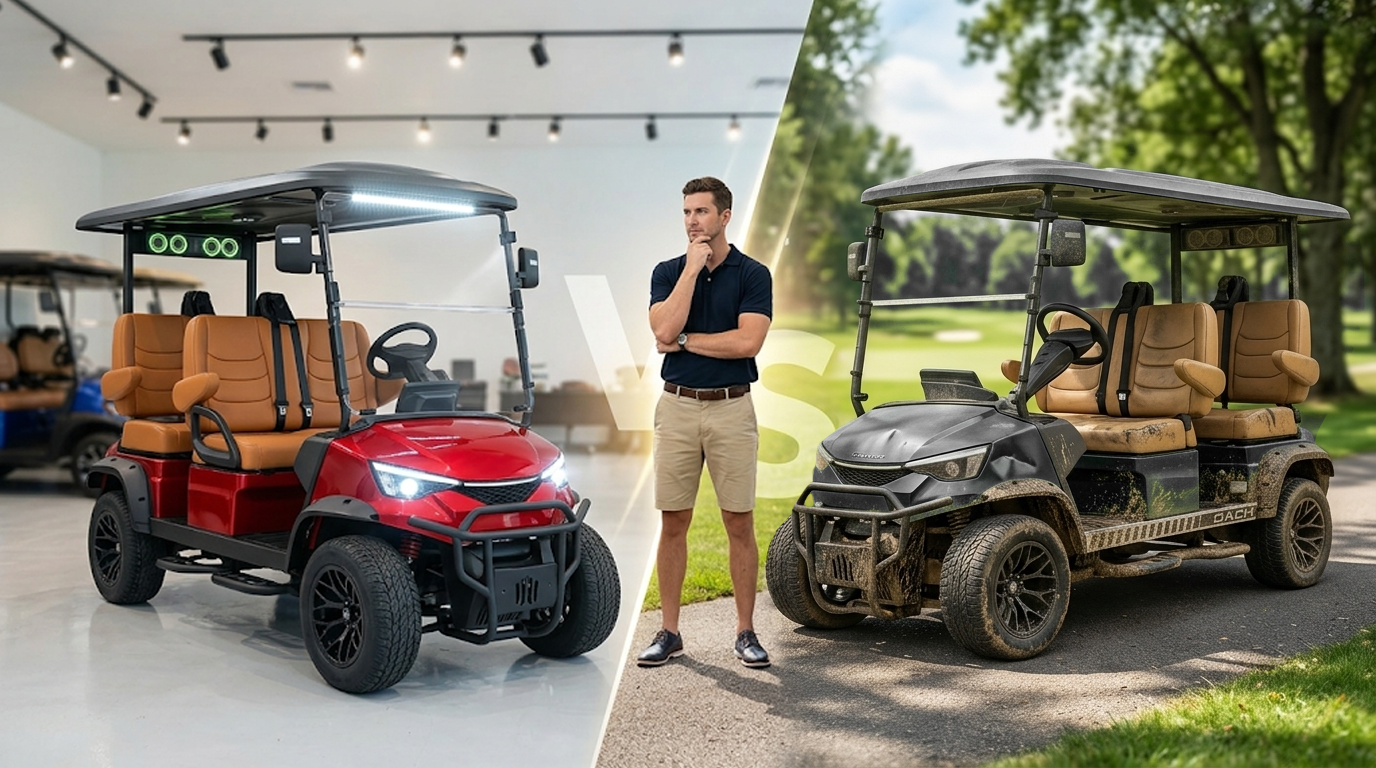
You've made up your mind that a golf cart is the right move. Now comes the part where everyone has an opinion: buy new and get the warranty, or buy used and save some real money? Both camps make a solid case, and the honest answer is that neither option wins for every buyer. The right choice depends almost entirely on how you'll use the cart, how long you plan to keep it, and what the battery situation looks like.
If you're searching for used golf carts for sale and wondering whether you're leaving money on the table, or eyeing new golf carts for sale and trying to justify the premium, this guide gives you a straight-up comparison so you can stop second-guessing and start shopping with clarity.
What the Market Is Telling Us Right Now
Before comparing new and used side by side, it helps to understand the broader picture.
Golf carts typically depreciate 10 to 15% per year in the first few years, meaning a cart from just a few years ago in excellent condition can already be worth 30 to 50% less than a brand-new equivalent, which is exactly what makes the used market so appealing for budget-conscious buyers.
A new golf cart loses roughly 18% of its value in the first year, then about 10 to 12% per year through year five, after which depreciation slows considerably to 3 to 5% per year. A well-kept cart from a reputable brand can still be worth 50% or more of its original price at the five-year mark.
That depreciation curve is the central tension in this decision. New carts offer the most cart for your money upfront, in the sense of features and condition. Used carts let someone else absorb that first-year hit and hand you the savings.
The Case for Buying New
New golf carts for sale come with a list of advantages that go well beyond just looking clean in the driveway.
You Know Exactly What You're Getting
With a new cart, there's no battery history to investigate, no previous owner habits to account for, and no unknown maintenance deferred from a prior season. The battery pack is fresh, the frame is unscratched, and the electronics haven't been touched by anyone before you. That certainty is worth something, particularly for buyers who want to skip the due-diligence process entirely.
Warranty Coverage Changes the Equation
Most new electric golf carts come with manufacturer warranties covering the battery, drivetrain, and electronics, typically ranging from one to three years on the cart body and two to eight years on the battery pack depending on chemistry and brand. That warranty means the first major mechanical or battery issue isn't automatically your financial problem.
For New Hampshire buyers who plan to run the cart as a daily driver or street-legal NEV year-round, that coverage is especially relevant. Winter conditions, freeze-thaw cycles, and road salt exposure can accelerate wear in ways that are harder to predict on a used cart with an unknown history.
Factory LSV Compliance Is Cleaner to Buy New
If you want a street-legal Neighborhood Electric Vehicle for public road use in New Hampshire, buying a factory-compliant new cart is the most straightforward path. The cart arrives with a 17-digit VIN already assigned, every required safety feature installed, and documentation ready for the NH DMV registration process. There's no guesswork about what does or doesn't meet the standard.
The Golf Cart vs LSV in New Hampshire: Which One Is Right for You? guide explains the full distinction between a standard cart and a street-legal LSV, and why the compliance details matter before you commit to a purchase in either category.
Access to the Latest Battery Technology
New carts let you choose your battery chemistry from day one. Lithium options, particularly LiFePO4, are now standard across premium new configurations and offer 8 to 12 years of service, zero maintenance, consistent power delivery in cold weather, and significantly better range per charge than lead-acid alternatives. Buying new with lithium means you're not inheriting someone else's battery decisions.
The Case for Buying Used
Used golf carts for sale represent a genuinely smart purchase for many buyers, and the stigma around buying used in this category is largely unwarranted. Here's why.
The First-Year Depreciation Already Happened
As the market data shows, a golf cart loses the most value in the first 12 months after purchase. When you buy a one to three year old cart, you're stepping in after that cliff and buying a vehicle that is, mechanically, essentially the same as a new equivalent while paying considerably less for it. If the condition is good and the battery is healthy, this is where the best value in the entire market lives.
Used Prices Leave Room for Battery Upgrades
For buyers who find a mechanically sound used cart with an aging lead-acid pack, the math sometimes works out favorably: purchase the cart at a lower price, factor in the cost of a lithium upgrade, and still come out below the cost of a comparable new cart with lithium already installed. That path requires more planning and a realistic cost estimate, but it's a legitimate route to a great cart at a lower all-in number.
The Best Lithium Golf Carts for NH Campgrounds and Lake Communities guide covers which configurations and battery setups make the most sense for seasonal NH buyers, which is useful context whether you're buying new or considering a used cart with a lithium upgrade in mind.
Budget Flexibility Across More Cart Types
The used market includes premium brands, high-capacity configurations, and specialty builds that might be out of reach at new prices. A used 6-seat cart from Club Car or Yamaha at 30 to 40% below its new price may represent a better real-world cart than a new entry-level option at the same budget. Knowing the Golf Cart Prices in New Hampshire across new and used categories helps calibrate what your budget actually unlocks in each scenario.
New vs. Used: A Direct Comparison
Factor | New Golf Cart | Used Golf Cart |
Upfront Cost | $8,000 to $16,000+ | $2,500 to $8,000 |
Battery Condition | Fresh, full lifespan ahead | Varies; battery age is key |
Warranty Coverage | Full manufacturer warranty | Limited or none |
Depreciation Hit | You absorb the first-year drop | Previous owner absorbed it |
LSV Compliance | Factory-ready, VIN assigned | May require verification or conversion |
Customization | Choose battery, seating, features new | Work with existing configuration |
Maintenance History | None | Request records; varies by seller |
Best For | Long-term ownership, daily use, road-legal needs | Budget buyers, occasional use, property-only carts |
The table makes one thing clear: neither option is universally better. They serve different buyer situations, and the right answer almost always comes down to use case and budget rather than a blanket preference for new or used.
The Electric vs. Gas Question in 2026
When you're comparing new golf carts for sale or browsing used inventory, you'll still encounter gas-powered options. It's worth addressing this directly because the electric vs. gas golf cart conversation is largely settled for most buyers in New Hampshire, though not for everyone.
Gas carts cannot be registered as Neighborhood Electric Vehicles in New Hampshire. The state's NEV classification is electric-only. If there's any chance you want to drive on public roads, you're shopping for electric from the start.
Beyond the legal angle, electric carts offer lower operating costs, no fuel stops, quieter operation in residential areas, and the ability to charge overnight at home. Used gas carts can still be appealing for buyers whose use is entirely on private property and who want a lower entry price with strong pulling power, but the ownership cost difference over several years of regular use tends to narrow the initial savings.
For most NH buyers looking for the best golf cart for the money over a multi-year ownership horizon, electric is the right starting point. The question then shifts to battery chemistry and whether to buy new or find a well-maintained used electric cart with solid battery health.
What to Check Before Buying a Used Cart
The biggest risk in the used market isn't the cart itself; it's the battery. A used cart with a strong, recently replaced or original lithium pack is a genuinely excellent purchase. A used cart with a degraded lead-acid pack that needs immediate replacement can erase most of the savings you were counting on.
Before committing to any used cart:
- Ask for battery age, service history, and any available diagnostic records
- Confirm the battery can hold a charge for a full ride without significant drop-off
- Check for corrosion on terminals and inspect the battery tray for signs of leakage or swelling
- Verify the VIN if the cart is being presented as street-legal, and confirm it's registered with the NH DMV
A professional diagnostic before purchase is always worth the cost. It removes the guesswork and gives you a clear picture of what you're buying.
Which Is the Best Golf Cart for the Money?
The most honest answer: the best golf cart for the money is the one that matches your real use case, has a healthy battery, and doesn't cost you more over the full ownership window than you expected going in.
If you'll use the cart regularly, want road-legal capability, and plan to own it for five or more years, a new cart with lithium batteries and full LSV compliance is the right investment. The lower maintenance burden, warranty coverage, and known battery lifespan make the premium worth it.
If you use a cart seasonally, primarily on private property, and want to keep your initial outlay low, a well-maintained used electric cart from a reputable brand, verified with a battery diagnostic, is a genuinely smart buy. SNH Golf Carts works with buyers at both ends of this spectrum to find the right fit before any money changes hands.
Golf Carts across new and pre-owned configurations are available to browse, compare, and test, with a team in Londonderry that can walk you through what the battery situation looks like on any specific unit you're considering.
Ready to Find the Right Cart at the Right Price?
Whether you're leaning toward new or ready to explore the used market, Shop Golf Carts to see what's currently available across configurations, battery types, and price points in southern New Hampshire.
Browse New and Used Golf Carts at SNH
FAQs
Q1. How much less do used golf carts cost compared to new ones?
Used golf carts typically sell for 40 to 60% of their original new price when in good condition, depending on brand, age, and battery health. The steepest depreciation happens in the first one to three years, which is why well-maintained used carts from that age window offer particularly strong value. Battery condition is the single most important variable affecting where a used cart falls within that range.
Q2. Is it risky to buy a used electric golf cart with the original batteries?
It depends on the age of the batteries and how the cart was maintained. Lead-acid batteries typically last 3 to 5 years, so an original pack on a 4-year-old cart is likely approaching replacement. A cart with original lithium batteries under 5 years old is a much lower-risk purchase. Always ask for battery history and run a diagnostic before finalizing any used electric cart purchase.
Q3. Can I find used street-legal LSV golf carts in New Hampshire?
Yes, but you need to verify the paperwork carefully. A street-legal used cart should have a 17-digit VIN, a current NH DMV registration as a Neighborhood Electric Vehicle, and documentation confirming it meets federal LSV safety standards. If any of those elements are missing, the cart may require significant work before it can legally operate on public roads, which affects its real value significantly.
Q4. Which golf cart brands hold their value best in the used market?
Club Car, Yamaha, and E-Z-GO consistently hold resale value better than lesser-known brands across the US used market. Club Car's aluminum chassis, in particular, eliminates rust, which is one of the primary value killers on older carts. A well-maintained cart from any of these three brands at 3 to 5 years old is a reliable used purchase with predictable ongoing maintenance and parts availability.