Best Lithium Golf Carts for NH Campgrounds and Lake Communities
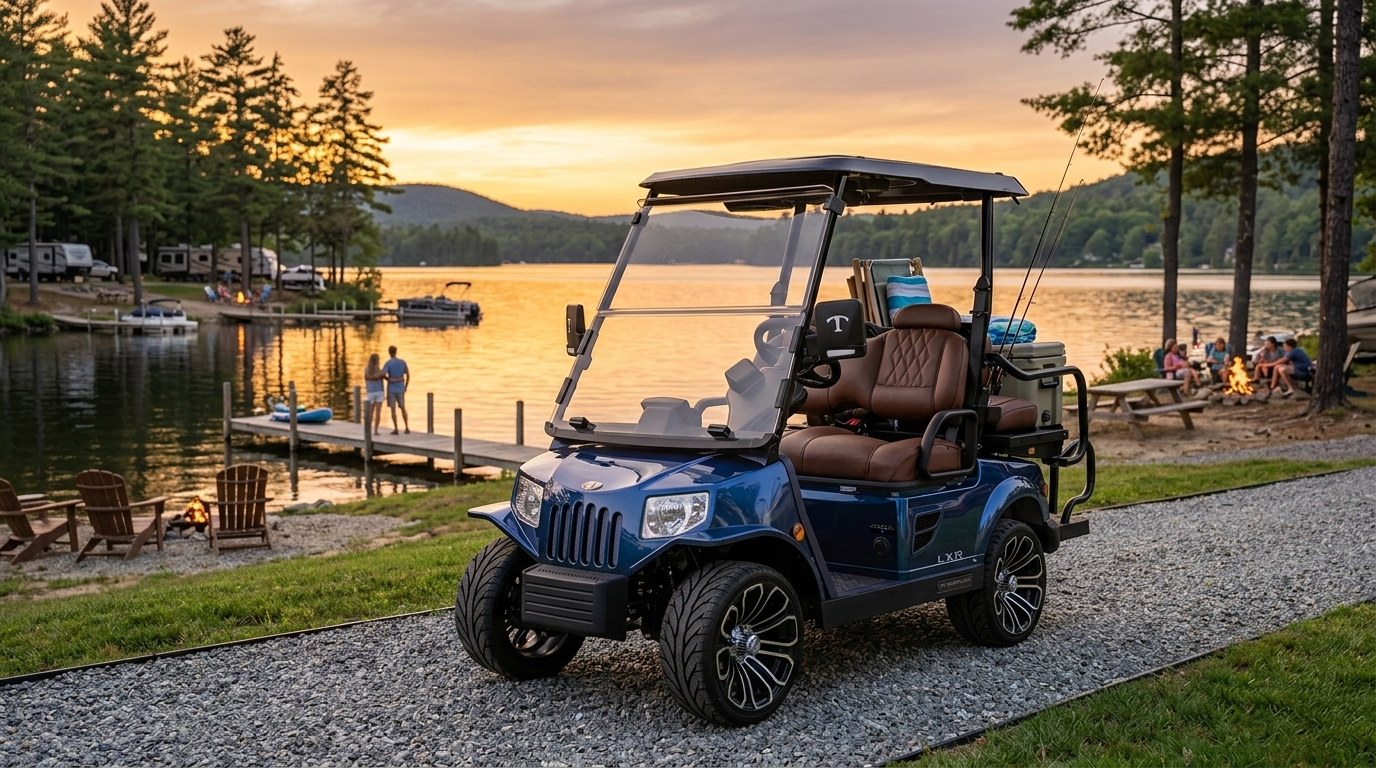
Picture this: It's a Saturday evening at a campground on Lake Winnipesaukee. The smell of campfire is in the air, the kids are heading down to the dock, and you're loading up the cart with a cooler, beach chairs, and the dog. The last thing you want in that moment is a cart that bogs down on a gravel incline, takes three hours to recharge, or wakes up your neighbors with excessive noise.
If you've been exploring options for quiet, reliable, and low maintenance campground golf carts in New Hampshire, you already know the conversation keeps coming back to one thing: lithium. This guide explains why that reputation is earned, what to look for in the best electric golf carts for campground and lake community use, and how to pick the right configuration for how you actually live out here.
The Numbers Tell the Story
The shift toward lithium golf carts is not a passing trend. The golf cart lithium battery market was estimated at $500 million in 2025 and is projected to grow at a compound annual growth rate of 15% through 2033, driven by superior performance, longer lifespan, and reduced maintenance costs compared to traditional lead acid options.
Specifically in the electric cart segment, the US electric golf cart market was estimated at USD 529.4 million in 2024 and is projected to reach USD 886.7 million by 2033, with North America leading global adoption. For buyers in New Hampshire, that growth reflects real demand from people who want better performance in a state that's harder on vehicles than most.
Why Lithium Makes So Much Sense for NH Campgrounds and Lake Living
The case for lithium golf carts starts with the terrain. Campground and lake community use in New Hampshire is not gentle. You're navigating gravel paths, grass, packed dirt, and occasionally some surprisingly steep slopes between the waterfront and the upper sites.
Lead acid battery packs lose power progressively under load, which means performance drops as the battery drains. Lithium chemistry delivers consistent power output from full charge to nearly empty. The cart that climbs easily at 80% charge behaves the same way at 20%.
There's also the noise factor. New Hampshire campgrounds and lake communities tend to have quiet hours, close site spacing, and neighbors who are on vacation and would prefer not to hear a struggling motor. The best electric golf carts running lithium power are noticeably quieter than their gas or lead acid counterparts, which matters more in a campground setting than almost anywhere else.
Then there's the charging reality. A typical campground stay involves plugging in at your site at night and riding all day. Lead acid packs on a standard charger can take 8 to 10 hours to reach a full charge and perform best when not regularly discharged below 50%.
Lithium packs charge faster, tolerate deeper discharge without damaging the cells, and require zero maintenance between seasons. No watering, no equalization charges, no monitoring. You plug in, you charge, you ride.
What to Look for When Choosing Golf Carts for Campgrounds
Not all campground golf carts are configured the same, and the right setup depends on how you actually use the cart. Here's a breakdown of the key decision points:
Seating Configuration
A 4 seat cart covers most family campground situations comfortably. If you're regularly carrying more than four people, or if your lake property hosts extended family on summer weekends, a 6 seat configuration with a rear flip seat or dedicated third row is worth the investment.
The extra capacity makes a real difference when you're shuttling people from the dock to the site and back.
Voltage System
Modern lithium golf carts typically run on 48V or 72V systems. For flat or mildly rolling campground terrain, a 48V lithium setup delivers excellent range and performance. For properties with significant elevation change, such as hillside lake communities or campgrounds with steep access roads, a higher voltage system provides better torque and more consistent performance on inclines.
Cargo Capacity
Campground use means hauling. Coolers, firewood, beach gear, kayak paddles, bags of charcoal. Carts with rear cargo beds or dedicated storage options handle this without asking the passengers to hold things on their laps. Look for a configuration that matches the actual hauling you plan to do rather than optimizing purely for passenger seating.
Feature | Why It Matters for NH Campground Use |
Lithium battery system | Consistent power on terrain, zero maintenance, faster charging |
4 or 6 seat configuration | Family capacity without multiple trips |
48V or 72V system | Higher voltage for hillside or elevated terrain |
Rear cargo bed or storage | Practical hauling without sacrificing passenger room |
Quiet motor operation | Respects quiet hours and nearby sites |
All terrain tires | Handles gravel, grass, and packed dirt reliably |
Weather resistant build | New Hampshire summers include rain; sealed components last longer |
The NH Factor: Why Our Climate Changes the Conversation
New Hampshire golf carts face conditions that buyers in warmer states simply don't deal with. Even in the camping season, spring and fall temperatures in the Lakes Region and White Mountains can drop significantly overnight.
Lithium ion cells handle low temperatures better than lead acid chemistry, but there's one specific thing worth knowing: most lithium batteries should not be charged at or below freezing temperatures without a battery management system that includes low temperature protection.
For campground owners and seasonal residents who store carts through the NH winter, this matters. A properly stored lithium golf cart with a quality battery management system will maintain its charge capacity through the off season far better than a lead acid pack under the same conditions. And when spring arrives at Pawtuckaway, Lake Sunapee, or anywhere along the Merrimack Valley, a lithium cart is ready to go without the reconditioning routine that lead acid systems often need after winter storage.
If you plan to use your cart on any campground roads that connect to public streets, it's worth knowing whether your cart qualifies as a road legal vehicle under New Hampshire law. The Hampshire Golf Cart Laws 2026 guide covers this in full, and Are Golf Carts Street Legal in New Hampshire walks through the specific registration and compliance requirements if you ever want to take your cart off the campground property.
Matching the Cart to the Community
Not every NH lake community is the same, and the right cart reflects the environment you're using it in.
For larger campgrounds with defined road networks, paved or packed gravel paths, and designated cart lanes, a standard 4 seat lithium cart with moderate ground clearance handles the environment well. The emphasis is on comfort, quiet operation, and range across a full day of use.
For lakefront properties with natural terrain, varying slopes, and more rugged access paths between structures, a lifted configuration with all terrain tires and a higher voltage system is worth considering. The ride height matters less for aesthetics than for practical clearance over roots, ruts, and soft ground around shorelines after rain.
For seasonal campground hosts or private property owners managing multiple structures, a utility configuration with a cargo bed and a strong payload rating can serve double duty: hauling supplies in the morning and carrying guests in the evening.
SNH Golf Carts carries configurations suited to each of these use cases, and the team at the Londonderry shop can help you identify which setup fits your property before you commit to a purchase. Shop Golf Carts to see current inventory across all categories, or stop in to talk through your specific terrain and use case directly.
What Owners Get Wrong When Buying Campground Carts
The most common mistake is buying based on price alone and ending up with a lead acid cart that needs replacement batteries within three to four seasons. The second most common mistake is buying a cart that's configured for a flat golf course when the actual property has real elevation change.
A few things worth being honest about before buying:
- If your campsite or lake property has slopes you'd describe as "pretty steep," voltage and torque matter. A 36V lead acid cart will struggle. A 48V or 72V lithium cart will not.
- If you plan to store the cart outdoors or in an unheated space through the NH winter, battery management and winterization matter. Lithium chemistry is more forgiving in cold storage than lead acid, but it still benefits from a proper shutdown process.
- If multiple people will be using the cart across a season, a 4 seat minimum configuration almost always makes more sense than a 2 seat cart with a cargo bed. Passengers win over hauling capacity in a campground environment almost every time.
Ready to Find the Right Cart for Your Lake Property or Campground?
Whether you're outfitting a seasonal lakefront property, looking for the best electric golf carts for a family camping season, or managing a campground that needs reliable New Hampshire golf carts for guest use, the right configuration makes all the difference. Premium Golf Carts built with lithium power are available now across multiple configurations suited to NH terrain and seasonal use.
[Browse Golf Carts for Campgrounds at SNH.]
FAQs
Q.1 Are lithium golf carts worth the higher upfront cost for campground use? For regular campground and lake community use in New Hampshire, yes. The combination of consistent power on varied terrain, faster charging that fits into an overnight campsite schedule, and zero maintenance makes lithium a practical investment rather than a premium one. Over a typical ownership period, the total cost of owning a lithium cart is competitive with or lower than the cumulative cost of maintaining and replacing lead acid packs.
Q.2 How long will a lithium golf cart charge last on a full day of campground use? A quality 48V lithium golf cart with a standard capacity pack typically delivers 25 to 40 miles of range depending on terrain, load, and temperature. For most campground use, which involves shorter trips across a single property rather than long distance travel, a full charge covers a full day comfortably. On properties with significant elevation change, range is reduced but power consistency is maintained throughout.
Q.3 Can I use a standard campsite outlet to charge a lithium golf cart? Yes. Most lithium golf carts come with a charger that operates on standard 110V or 120V outlets, the same as a standard campsite electrical hookup. Charging times vary by pack size and charger output, but most lithium packs reach a full charge in four to eight hours on a standard outlet, which fits naturally into an overnight charging routine.
Q.4 Do New Hampshire campgrounds allow personal golf carts? Most private campgrounds in New Hampshire permit personally owned golf carts on their internal road networks, though rules vary by property. Some campgrounds have specific speed limits, path restrictions, or registration requirements for privately owned carts. It's always worth confirming with the specific campground before arriving with a cart. For use on any public roads adjacent to or connecting campground properties, Golf Carts must meet New Hampshire's NEV registration and compliance requirements.