Golf Cart Rental Guide: Weddings, Camping & More
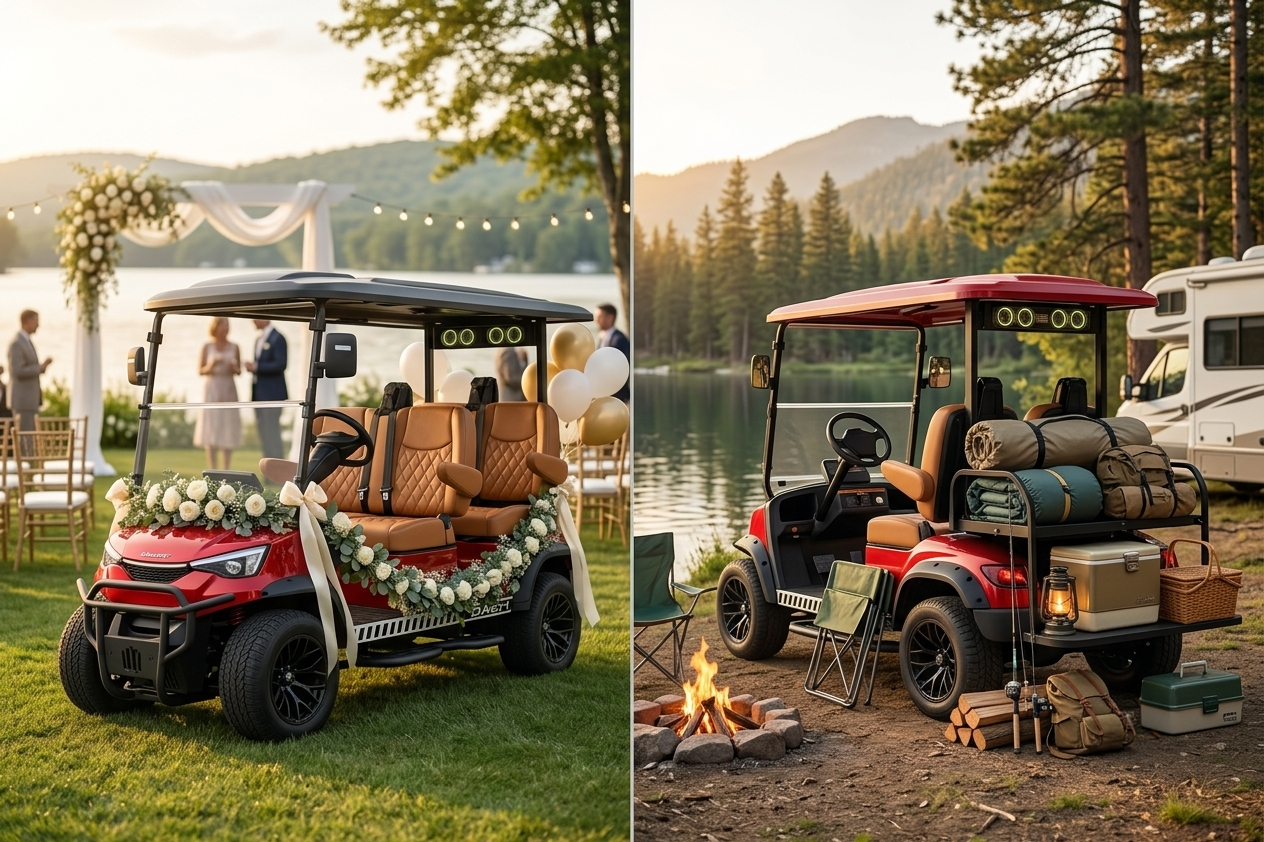
You're planning a wedding, a camping trip, or a big outdoor event, and someone suggests renting a golf cart. Suddenly everyone thinks it's a great idea. More than one, actually. Before you know it, you're online trying to figure out what it actually costs to rent a golf cart, what size you need, whether a street legal golf cart rental is even possible for your situation, and what the difference is between renting from a resort versus a dealer.
This guide covers all of it. Whether you're coordinating transportation for a wedding weekend in the Lakes Region, setting up a seasonal campsite with easy property access, or running an outdoor event that spans more ground than two legs can comfortably cover, here's everything you need to know about renting a golf cart the right way, and when it might make more sense to stop renting altogether.
Why Golf Cart Rentals Are Growing Fast
Golf cart rentals aren't just a niche convenience anymore. They've become a genuine part of how events, campgrounds, resorts, and even neighborhoods operate.
The global golf cart market is estimated to grow to USD 2.41 billion in 2026, driven significantly by rising adoption across resorts, gated communities, and institutional mobility uses beyond traditional golf course applications.
Rental services are estimated to stand firm in the market for the coming years with increasing growth, driven by customized leasing solutions, maintenance assistance, and fleet management facilities as event planners and tourism operators seek flexible, budget-friendly alternatives to permanent fleet ownership.
For occasional users, renting a golf cart for a family reunion, wedding weekend, or community event a few times a year typically costs $100 to $300 per event, making it the economically smarter choice for fewer than 15 days of annual use. Once use exceeds that threshold, ownership begins to look considerably more attractive, and we'll get to that math before this guide is done.
The Best Use Cases for Renting a Golf Cart
Not every situation calls for a rental, but when the fit is right, renting a golf cart is hard to beat for convenience, flexibility, and sheer fun. Here's where it makes the most sense.
Weddings and Outdoor Celebrations
Weddings are one of the most popular uses for a golf cart rental, and for good reason. Large outdoor venues, farms, vineyards, and lakeside properties often span more ground than guests can comfortably walk, especially in formal attire or with elderly family members in tow.
A rental fleet of two to four carts can handle guest transportation between ceremony and reception areas, help the wedding party move quickly between photo locations, and give the couple a genuinely memorable way to make their entrance or exit. For barn or countryside venues in New Hampshire, this kind of coordination makes the whole day run smoother without adding to the venue's permanent infrastructure.
Event golf cart rentals typically cost more than standard daily rates due to delivery, setup, and on-site logistics. Plan on $100 to $300 per cart per day for basic configurations, with decorated or specialty carts running higher. Booking at least a few weeks in advance during summer months is strongly recommended, as availability tightens fast around popular wedding dates.
Campgrounds and Seasonal Properties
Camping and seasonal lake or mountain property use is another natural fit for golf cart rentals. A cart makes getting around a campground, hauling gear to a site, and moving between areas on a large property significantly easier without the noise, emissions, or cost of a full vehicle.
Campground rentals are often available directly through the facility, priced by the day or week. For longer stays, weekly rates ranging from $200 to $450 offer meaningful savings over daily pricing. If you're at a seasonal property that you visit regularly, the math on renting versus owning shifts considerably after just a few seasons. The Best Lithium Golf Carts for NH Campgrounds and Lake Communities guide is worth reading if you're at that tipping point and curious about what ownership looks like in that context.
Large Outdoor Events and Festivals
Festivals, fairs, corporate outdoor gatherings, and sporting events all create the same core problem: a lot of ground, a lot of people, and staff or equipment that needs to move quickly. A fleet of rental carts solves this in a way that no other solution does as cleanly.
Event organizers typically rent from specialized companies that handle delivery, fleet management, and pickup. Multi-cart packages often come with negotiated pricing below standard single-cart daily rates, making fleet rentals more cost-effective than piecing together individual bookings.
Vacation Destinations and Resort Stays
Many New Hampshire resort areas and vacation communities allow carts on internal roads and pathways, and some rental companies operate specifically in these zones. If you're staying somewhere with a large property, waterfront access, or golf course, a rental cart for the duration of your stay adds real convenience without any long-term commitment.
Golf Cart Rental Cost: What to Actually Budget
Golf cart rental cost varies more than most people expect, and the range is wide enough that going in without a baseline can lead to sticker shock or, just as commonly, underestimating what a reasonable rate looks like.
Here's a clean breakdown of typical rental pricing across duration and cart type:
Rental Duration | 2-Seat Cart | 4-Seat Cart | 6-Seat Cart |
Hourly | $10 to $25 | $15 to $30 | $20 to $40 |
Daily | $40 to $70 | $60 to $100 | $90 to $150 |
Weekly | $200 to $350 | $300 to $450 | $400 to $600 |
Monthly | $300 to $500 | $400 to $700 | $600 to $1,000+ |
Event-specific rentals for weddings and large gatherings tend to run at the higher end of the daily range due to delivery, setup coordination, and on-site logistics support. Always confirm what's included before booking, since some providers bundle delivery while others charge $50 to $100 or more for it separately.
Hidden costs to watch for include security deposits (often $200 to $500 per cart), insurance add-ons ($10 to $50 per day), cleaning fees if the cart comes back with heavy dirt or damage, and mileage caps if the rental runs for an extended period. Asking for a full cost breakdown before signing is not excessive; it's just smart.
Street Legal Golf Cart Rentals: What You Need to Know
If you're planning to use a rental cart on a public road rather than private property, the situation changes. A standard golf cart cannot legally operate on a public road in New Hampshire, regardless of where you rented it or what the rental company implies.
A street legal golf cart rental refers specifically to a cart that meets the state's Neighborhood Electric Vehicle (NEV) classification: electrically powered, capable of 20 to 25 mph, equipped with DOT-approved lighting, turn signals, seat belts at every position, a windshield, mirrors, and a 17-digit VIN. Only a registered, insured NEV can legally be driven on state roads with posted speed limits of 35 mph or lower.
If you need a rental cart for public road use, confirm with the rental provider that the cart is registered as an NEV and is covered by the appropriate insurance for road use. Not all rental fleets include street-legal configurations, and assuming a cart is road-legal without verifying can result in fines and uninsured exposure in the event of an accident. For the full picture of what qualifies for road use in New Hampshire, Are Golf Carts Street Legal in New Hampshire breaks it all down clearly.
How to Choose the Right Cart for Your Rental Situation
Choosing the right cart before you book saves money and frustration on the day you need it.
The seating count is the most common mistake. A 4-seat cart feels adequate on paper but gets uncomfortable fast when you're moving groups of six or more repeatedly. For weddings with frequent shuttle runs, a 6-seat configuration or multiple smaller carts typically handles logistics better than one undersized rental straining to keep up.
Battery range matters more than most renters think about. A standard lead-acid rental cart typically delivers 15 to 25 miles per charge. If your event spans a large property and you're running the cart continuously for several hours, you may run low before the day is done. Ask about battery type and range at the time of booking, and confirm whether charging support is available on-site if needed.
For camping or seasonal property use, the terrain factor matters. Steep grades, rough trails, or soft ground require carts with adequate torque and ground clearance. Confirm the cart is suited to your actual terrain before assuming any rental will handle whatever the property throws at it. Electric Golf Carts with lithium battery systems are particularly well-suited to demanding terrain because they deliver consistent power output from full charge to near-empty, unlike lead-acid packs that lose performance as they drain.
When Renting Stops Making Sense
Renting is genuinely the right call for occasional use, one-time events, and short-term vacations. But there's a point where the math flips.
If you're renting for a camping season that runs May through September, spending $400 to $700 per month to have a cart available, that's $2,000 to $3,500 across a single season. Over two seasons, you've paid more than the cost of a mid-range new cart outright, with nothing to show for it at the end.
If you're hosting events on a regular basis, using a cart on private property year-round, or want consistent access without booking windows and availability constraints, ownership is the more practical and economical path. Golf Cart Prices in New Hampshire walks through the full price landscape for new and used models, so you can compare what ownership actually costs against the rental rates you're looking at.
Golf Carts built to your specific use case, whether that's a private property cart for a lake home or a fully street-legal configuration for daily neighborhood use, also give you something a rental never can: the freedom to customize, maintain on your own schedule, and build equity through resale value.
Ready to Find the Right Cart for You?
Whether you're still in rental territory or ready to make the move to ownership, seeing the full range of available options is the best starting point.
FAQs
Q1. How much does it cost to rent a golf cart for a wedding?
Event rental pricing for weddings typically runs $100 to $300 per cart per day for standard configurations, with decorated or specialty carts running higher. Most event rental companies charge additional fees for delivery, setup, and pickup, so always ask for a full itemized quote rather than relying on a headline daily rate.
Q2. Can I rent a street legal golf cart for use on public roads in New Hampshire?
Yes, but only if the rental cart is classified as a Neighborhood Electric Vehicle and is properly registered and insured for road use. Not all rental fleets include street-legal configurations, and a standard golf cart that isn't NEV-registered cannot legally operate on a public road regardless of its speed or equipment.
Q3. Is renting or buying a golf cart the better choice for campground use?
For a single camping trip or short stay, renting is the straightforward choice with no long-term commitment. For seasonal property owners who use a cart regularly from spring through fall, the cost comparison shifts considerably after one or two seasons of rental fees.
Q4. What hidden costs should I watch for when renting a golf cart?
The most common surprises are security deposits (often $200 to $500 per cart), delivery and pickup fees ($50 to $100 or more depending on distance), optional insurance add-ons ($10 to $50 per day), and cleaning fees if the cart comes back in poor condition.