Electric Golf Carts: The Complete Guide for 2026
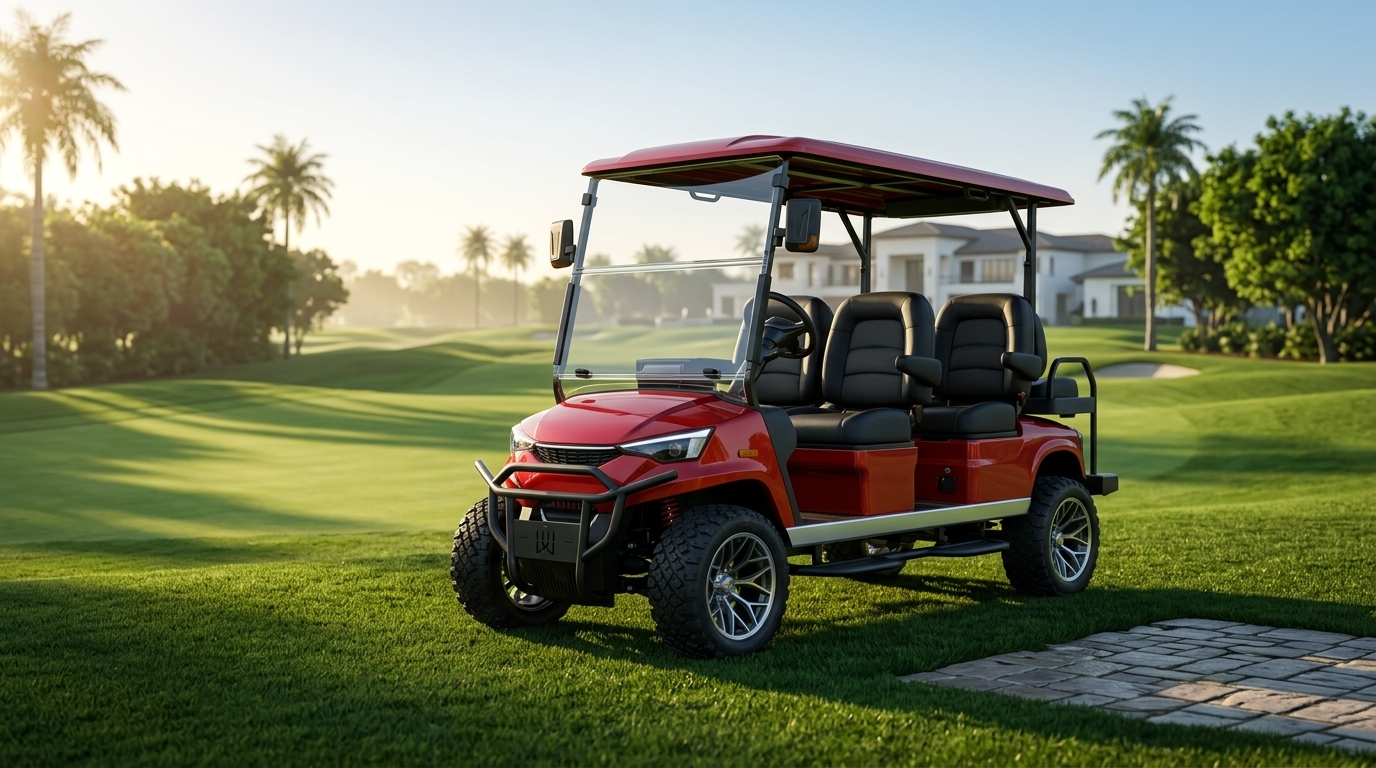
If you've been thinking about buying an electric golf cart and feeling a little overwhelmed by the options, you're not alone. The market has expanded dramatically in recent years, and what was once a simple choice between a handful of models has become a full-blown decision tree involving battery chemistry, seating capacity, voltage systems, street-legal classifications, and more.
This guide cuts through all of it. Whether you're eyeing electric golf carts for sale for the first time or upgrading from an older model, everything you need to make a confident decision is right here: pricing, battery life, street-legal options, 6 seater golf cart configurations, and what actually matters when you're standing in front of a lineup of carts trying to figure out which one is yours.
Why Electric Is the Only Real Conversation in 2026
The shift away from gas has happened. It's not a trend anymore; it's the default.
Electric golf carts now account for approximately 95% of the total golf cart market share in 2026, according to Future Market Insights. That number reflects a structural shift that started years ago and has now reached the point where gas-powered carts are the exception rather than the rule.
The global electric golf cart market was valued at $2.3 billion in 2025 and is projected to grow to $3.68 billion by 2035 at a compound annual growth rate of 4.8%, driven primarily by demand for eco-friendly, low-maintenance transportation. And it's not just golf courses driving that growth. Gated communities, resorts, campuses, and daily neighborhood users across the country are all contributing to the expansion.
Lithium-ion batteries are now integrated into 63% of new electric golf cart models, up significantly from just a few years ago. That shift in battery technology is one of the most important developments for buyers to understand, and it shapes almost every other decision in the buying process.
Electric vs. Gas: Is This Still a Question Worth Asking?
For most buyers in New Hampshire in 2026, the answer is no. Here's why.
New Hampshire law requires that any cart registered as a Neighborhood Electric Vehicle (NEV) for road use must be electrically powered. Gas carts are excluded from that classification entirely. If there's any possibility you want to drive your cart on a public road with a posted speed limit of 35 mph or lower, you are shopping for an electric cart from the start. The Are Golf Carts Street Legal in New Hampshire guide covers that classification in full detail.
Beyond the legal angle, the operating cost case for electric is strong and getting stronger. Electric carts cost $100 to $300 per year to maintain on average, while comparable gas carts run $400 to $700 annually once you factor in oil changes, spark plug replacements, fuel costs, and carburetor maintenance. Over a five-year ownership window, that difference compounds into real money.
Electric carts are also quieter, produce zero emissions, and can be charged overnight at home using a standard outlet or dedicated charger. For buyers using a cart as a daily driver around their neighborhood, the convenience of waking up to a full charge is something people rarely go back from once they experience it.
Understanding Battery Types: The Decision That Matters Most
When you're comparing electric golf carts, the battery chemistry tells you more about the long-term ownership experience than almost any other specification. Here's how the main options compare.
Battery Type | Range Per Charge | Lifespan | Maintenance Required | Upfront Cost |
Flooded Lead-Acid | 15 to 25 miles | 3 to 5 years | Monthly watering and terminal cleaning | Lowest |
AGM (Sealed Lead-Acid) | 18 to 28 miles | 4 to 7 years | Minimal, no watering required | Moderate |
Lithium (LiFePO4) | 25 to 50+ miles | 8 to 12 years | Zero ongoing maintenance | Highest upfront |
The range numbers here are meaningful for New Hampshire buyers. A cart with a healthy lithium pack delivers 25 to 50 miles per charge in real-world conditions, with well-optimized setups exceeding that on flat terrain. A lead-acid cart tops out at 15 to 25 miles on a good day and degrades noticeably over time. If you're using your cart for actual daily transportation rather than occasional loops around a private property, the difference shows up quickly.
Lithium batteries also charge in 4 to 6 hours compared to 8 to 12 hours for lead-acid. That means a cart that ran low in the afternoon is ready again by evening without any intervention. For New Hampshire winters specifically, lithium handles cold temperatures significantly better than lead-acid, maintaining stable output in conditions where lead-acid packs can lose 25 to 50% of their rated capacity.
The higher upfront cost of lithium is real, but the 10-year ownership math tends to favor it for most active users. When you factor in the elimination of battery replacements, zero maintenance time, and better range consistency, the premium pays off over a full ownership cycle.
Seating Configurations: 2-Seat, 4-Seat, and 6 Seater Golf Cart Options
Seating capacity is one of the most practical decisions in the buying process, and it's worth thinking through before you start comparing models.
Two-seat configurations are the most common and most affordable. They work well for solo riders, couples, and buyers who primarily use the cart on a golf course or for individual errands. They're lighter, easier to maneuver, and typically the lowest entry price in any model lineup.
Four-seat configurations are the most popular category for residential buyers and the sweet spot for most southern New Hampshire households. They handle families, guests, and everyday use comfortably without the footprint or cost of a larger cart.
A 6 seater golf cart is the right choice for larger families, buyers who frequently carry groups, or anyone running a cart as a shared vehicle on a larger property or in a hospitality setting. Six-seat configurations add $3,000 to $5,000 over a comparable four-seat model at the new price level, and the extended frame and heavier suspension mean slightly higher operating costs as well. That said, if the seating capacity matches your actual use case, it's worth every dollar.
For buyers considering a street-legal configuration, all three seating options can be built to LSV specification. Every seating position requires a seat belt under NH's NEV requirements, so the compliance package scales with the seating count.
Street-Legal Electric Golf Carts: What Makes Them Different
Not all electric golf carts are created equal when it comes to road use. A standard electric cart built for private property or golf course use operates at 12 to 15 mph and carries no legal equipment requirements beyond what the property owner sets. A street-legal electric cart built to LSV specification is a different vehicle category entirely.
To qualify as a Neighborhood Electric Vehicle in New Hampshire and be eligible for registration, a cart must be capable of traveling between 20 and 25 mph, meet federal safety standard 49 CFR 571.500, carry a 17-digit VIN, and be equipped with the following:
- DOT-approved headlights, taillights, and brake lights
- Front and rear turn signals
- Full windshield
- Driver-side exterior mirror at minimum
- Seat belts at every seating position
- Amber front and red rear reflectors
A factory-built LSV arrives with all of this already installed and a VIN already assigned, which simplifies the NH DMV registration process considerably. Golf Carts built to LSV specification from the factory are the most common starting point for buyers who want road access without the complexity of a post-purchase conversion.
The Hampshire Golf Cart Laws 2026 guide has the complete breakdown of where registered NEVs can travel in New Hampshire and what the licensing and insurance requirements look like.
Electric Golf Carts for Sale: New vs. Used
When you're browsing electric golf carts for sale, the new versus used question comes down to budget, battery health, and how much certainty you want in the purchase.
New electric golf carts offer warranty coverage, the latest battery technology, and full reliability from day one. For buyers who want to start with lithium and not think about battery maintenance for a decade, new is the cleaner entry point. Factory-compliant LSV configurations are also simpler to buy new, since the compliance work and VIN assignment are already handled.
Used electric golf carts offer genuine value when the battery pack is healthy. A three to five year old cart with a recent battery replacement can be an excellent purchase at 40 to 60% of the original price. The risk is buying a cart with an aging lead-acid pack that's already past its service window. Always ask for battery service history and consider having a technician run a diagnostic before finalizing any used purchase.
For buyers ready to Shop Golf Carts and see what's currently available across new and used configurations, browsing current inventory is the fastest way to match budget and use case to a specific vehicle.
What to Look for When Buying an Electric Golf Cart in NH
A few practical considerations specific to buying in New Hampshire:
The first is winter compatibility. If you plan to store the cart seasonally, lithium handles our winters far better than lead-acid and requires less hands-on maintenance during the off-season. If you plan to run the cart year-round, lithium's stability in cold temperatures is an even stronger argument.
The second is intended use. Private property buyers have more flexibility in what they purchase. Buyers who want to drive through their neighborhood in Londonderry or Nashua, cross public roads, or use the cart as regular daily transportation need a factory-compliant NEV with all required safety equipment and a VIN ready for registration.
The third is service support. In a state like New Hampshire where not every shop services electric golf carts, choosing a cart from a brand with reliable local parts availability and a dealer who understands the NH registration process makes ownership significantly less complicated.
Premium Golf Carts built with lithium battery systems and full LSV compliance are well-suited to NH's climate and the practical demands of daily use in southern New Hampshire communities.
Ready to Find Your Electric Golf Cart?
Whether you're shopping for a standard cart for your property or a fully registered street-legal NEV for daily use across southern New Hampshire, SNH Golf Carts is ready to help you find the right match before any money changes hands.
Browse Electric Golf Carts for Sale
FAQs: Electric Golf Carts in 2026
Q1. How long do electric golf cart batteries actually last in real-world use?
Lead-acid batteries typically last 3 to 5 years under regular use, though harsh New Hampshire winters and improper off-season storage can shorten that considerably. Lithium batteries last 8 to 12 years under normal use, require no maintenance, and handle cold temperatures significantly better. For buyers who plan to keep their cart long-term, the lithium lifespan advantage alone often justifies the upfront cost difference.
Q2. Can I use an electric golf cart as my primary vehicle for neighborhood transportation in NH?
Yes, if the cart is registered as a Neighborhood Electric Vehicle. A factory-built LSV that meets federal safety standards, carries a 17-digit VIN, and is registered with the NH DMV can be driven on any public road with a posted speed limit of 35 mph or lower. You'll need a valid driver's license, minimum age of 16, and liability insurance for registration.
Q3. What is the difference between a 48V and a 72V electric golf cart?
Voltage determines power output, speed, and range. A 48V system is the most common configuration and handles standard neighborhood and property use effectively, with a range of 25 to 50 miles per charge on a lithium pack. A 72V system delivers more torque, handles hills more aggressively, and extends range further, but comes at a higher purchase and replacement cost. For most NH buyers using a cart for daily neighborhood transportation, 48V is the practical sweet spot.
Q4. Do electric golf carts hold their resale value?
Yes, particularly carts from well-established brands in good condition with healthy batteries. A well-maintained electric golf cart from a reputable brand typically holds 40 to 60% of its original value after three to five years. Battery condition is the single largest variable in resale pricing. Carts with recently replaced or original lithium batteries command the highest used market prices, while carts with aging or degraded lead-acid packs are priced accordingly.