When Should You Replace Your Electric Golf Cart Battery?
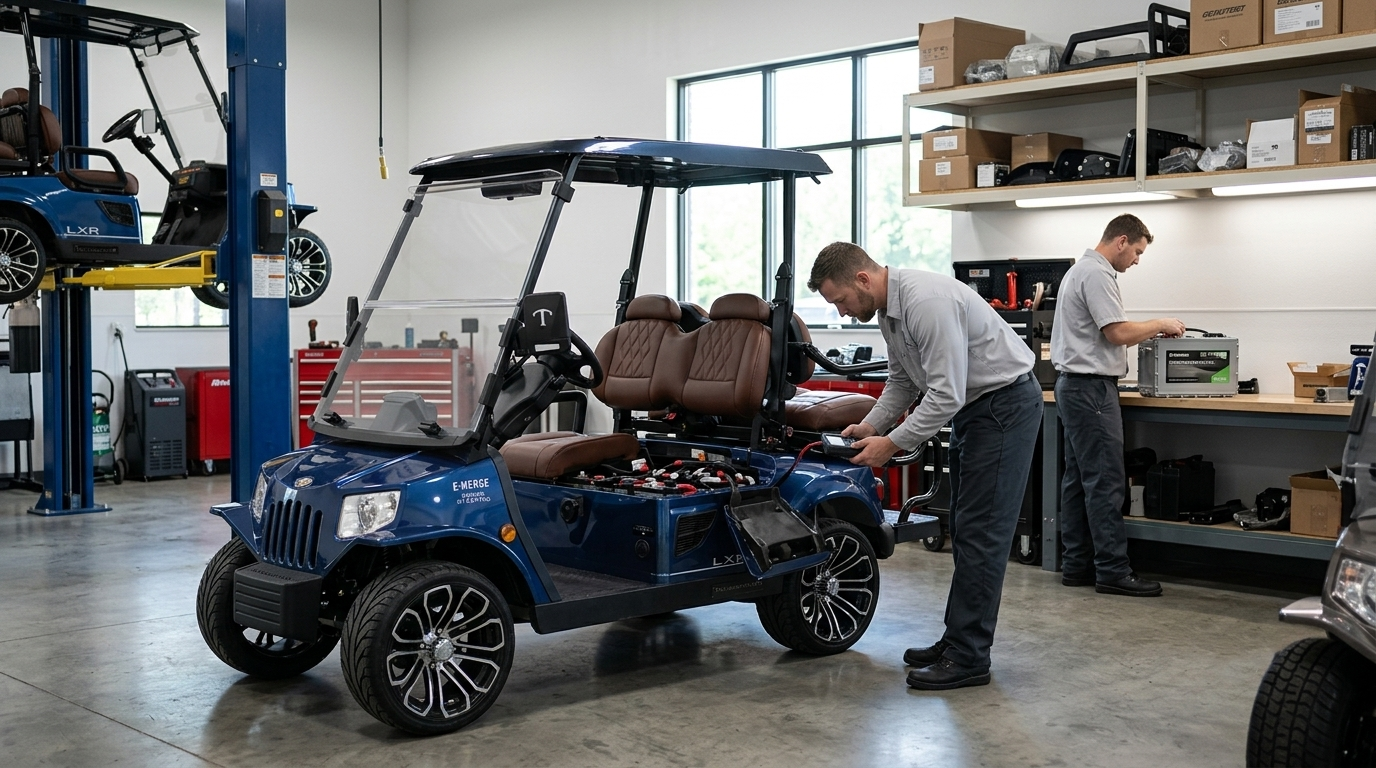
You've noticed it. The cart that used to make it across the neighborhood and back without a second thought now seems to fade by the second loop. Charging takes longer than it used to. The hill that was never a problem now feels like a struggle. None of it happened overnight, and that's exactly why so many owners aren't sure if it's time to act or just keep hoping the cart bounces back.
It's a fair question, and one the team at SNH Golf Carts hears constantly: how do you actually know when an electric golf cart battery needs replacing instead of just a little extra patience? This guide walks through the warning signs, the real lifespan numbers by battery type, and the maintenance habits that can buy you more time before replacement becomes the only option.
The Numbers That Frame This Decision
Before getting into the warning signs, it helps to know what a normal lifespan actually looks like, because "normal" varies a lot depending on the battery chemistry sitting under your seat.
Lead-acid batteries typically last between three and five years, while lithium-ion batteries can reach up to ten years with proper care. That's not a small gap. It's the difference between replacing your pack once a decade or three to four times over the same period.
The economics back this up clearly. Lithium costs more upfront than lead-acid, but the total cost of ownership picture flips quickly once replacement cycles, labor, and efficiency are factored in, with an average set of lead-acid batteries often requiring replacement two or three times across the lifespan of a single lithium pack.
And the market has already made its decision on this. Roughly 62% of new golf carts shipped in North America now use lithium technology instead of traditional lead-acid packs. If you're weighing whether your next battery replacement is a good moment to switch chemistries entirely, you're not alone, and the broader market has been heading that direction for a while now.
How Long Do Golf Cart Batteries Last? A Breakdown by Type
Golf cart battery lifespan depends almost entirely on chemistry, with usage patterns and maintenance habits shaping where you land within each range. Here's how the three most common battery types compare.
Battery Type | Typical Lifespan | Charge Cycles | Maintenance Needs |
Flooded Lead-Acid | 3 to 5 years | 300 to 500 cycles | Monthly watering, terminal cleaning |
AGM (Sealed Lead-Acid) | 4 to 7 years | 500 to 1,000 cycles | Minimal, no watering required |
Lithium (LiFePO4) | 8 to 12 years | 2,000 to 5,000+ cycles | None, fully sealed and maintenance-free |
The cycle count matters more than people realize. A charge cycle is one full discharge and recharge, and every battery chemistry has a finite number before performance starts to decline meaningfully. Lead-acid batteries wear out their available cycles fast, which is exactly why owners who use their cart daily tend to hit replacement time sooner than owners who only drive occasionally.
It's also worth noting that private owners generally get more years out of a battery pack than fleet or shared-use carts, simply because the cycle count accumulates more slowly with lighter, less frequent use.
If you want the deeper dive into how this plays out specifically for Electric Golf Carts in 2026, that guide covers battery technology alongside everything else buyers need to know before purchasing.
The Warning Signs Your Battery Is Nearing the End
This is the part most owners actually came here for. Here's what to watch for, in roughly the order most people notice it.
Reduced Range
If your cart used to comfortably cover your regular route and now runs out of charge well before you get home, the battery pack is losing its ability to hold a charge. This is one of the earliest and most reliable indicators that replacement is approaching, and it's worth paying attention to even when the drop feels small at first.
A useful benchmark here: once your range drops to 70 to 80% of what it originally delivered, the battery is nearing end of life. That threshold applies to both lead-acid and lithium systems, though lithium tends to decline slowly and predictably rather than dropping off suddenly the way lead-acid often does.
Longer Charging Times
A battery in good health charges within the expected window for its chemistry. When charging starts taking noticeably longer, or the cart never quite reaches a full charge, the internal cells are degrading. This often becomes more obvious in New Hampshire after winter storage, when cold temperatures accelerate wear that was already underway.
Struggling on Hills or Slow Acceleration
If your cart used to handle inclines without hesitation and now bogs down or loses power climbing a driveway or hill, the battery simply isn't delivering the power your motor needs anymore. This is a power problem rather than a mechanical one, and it tends to show up before a full failure does.
Visible Damage or Swelling
Cracked cases, swollen cells, or heavy corrosion around the terminals are physical signs that shouldn't be ignored. Corrosion can sometimes be cleaned and managed, but swelling or cracking means the battery needs replacement immediately, both for performance and for safety.
Batteries That Won't Hold a Charge Overnight
A cart that shows a full charge but dies quickly, or loses significant charge just sitting overnight, has a pack with severely reduced capacity. At this stage, replacement isn't optional anymore. It's the only path back to reliable performance.
For a full walkthrough of what the replacement process itself looks like, along with current cost ranges, the Golf Cart Battery Replacement in NH guide covers exactly what to expect when you bring your cart in for service.
Golf Cart Battery Maintenance: How to Extend What You Have
Before assuming replacement is your only option, a few maintenance habits genuinely extend battery life, sometimes by years.
For lead-acid batteries, watering is non-negotiable. Checking water levels regularly, keeping terminals clean to prevent corrosion, charging the battery after each use without overcharging, and storing it in a cool, dry environment all contribute meaningfully to a longer service life. Skipping these steps is one of the fastest ways to push a battery toward early failure.
Charging habits matter for both chemistries, but in different ways:
- Avoid letting any battery sit at a low charge for extended periods, since deep discharges accelerate wear, particularly for lead-acid systems.
- Use the correct charger for your battery type. A lead-acid charger used on a lithium pack, or vice versa, can cause real damage and shorten lifespan significantly.
Temperature is the other major factor. Heat accelerates chemical aging in any battery, while cold temporarily reduces available capacity, which is a real consideration during New Hampshire winters. Lithium batteries handle cold meaningfully better than lead-acid, but both benefit from proper storage when the cart isn't being used regularly.
If you're already doing all of this and still seeing decline, that's a strong signal you're dealing with normal end-of-life behavior rather than a fixable maintenance gap.
When Replacement Makes More Sense Than Repair
There's a point where continuing to nurse an old battery pack along costs more than simply replacing it, and recognizing that point saves both money and frustration.
If your cart is showing multiple warning signs at once rather than just one isolated symptom, that's usually a sign the full pack is failing rather than a single cell. Replacing only the weak batteries in an otherwise old lead-acid pack often creates imbalance issues that shorten the life of the new cells, which is why a full pack replacement is typically the right call once decline becomes noticeable across multiple areas.
If your cart is more than four years old on its original lead-acid batteries and showing performance issues, a battery assessment is worth scheduling before the situation worsens further. Waiting until a complete failure usually means losing the cart for longer and facing a more urgent, less planned expense.
This is also a natural decision point for owners considering a lithium upgrade rather than another lead-acid replacement. If you've been frustrated by the watering routine, the shorter lifespan, or the winter performance drop that comes with lead-acid, a replacement cycle is the most logical moment to make the switch. Owners in lake communities and seasonal-use settings in particular tend to benefit from lithium's resilience; the Best Lithium Golf Carts for NH Campgrounds and Lake Communities guide breaks down why that pairing works so well for seasonal and recreational property owners specifically.
What This Means for Your Next Move
If you're seeing one or two early warning signs, proper maintenance might buy you another season or two before replacement becomes necessary. If you're seeing several signs together, particularly reduced range combined with slow charging or hill struggles, the battery is very likely past the point where maintenance alone will fix it.
Either way, getting a professional diagnostic is the fastest way to know exactly where your pack stands rather than guessing based on symptoms alone. A quick assessment tells you whether you're looking at a simple fix, a full pack replacement, or a good opportunity to upgrade to lithium and stop thinking about this question again for the better part of a decade.
Golf Carts running on healthy, well-maintained battery systems perform noticeably better across every measure that matters, from range to hill climbing to overall reliability.
Ready to Get a Real Answer on Your Battery?
Guessing isn't necessary when a quick diagnostic can tell you exactly where your battery stands and what your best options are.
Shop Golf Carts and Battery Upgrades at SNH
FAQs: Electric Golf Cart Battery Replacement
Q1. How long do golf cart batteries last on average?
Lead-acid batteries typically last 3 to 5 years under normal use, while lithium batteries can last 8 to 12 years with proper care. The exact lifespan depends heavily on usage frequency, charging habits, and maintenance, with private owners generally getting more years out of a pack than shared or fleet-use carts.
Q2. What's the clearest sign that I need to replace golf cart batteries?
Reduced range is usually the earliest and most reliable indicator, especially once your cart's range drops to roughly 70 to 80% of what it originally delivered. If that's combined with longer charging times or noticeably weaker performance on hills, those signs together strongly suggest the battery pack is reaching the end of its useful life.
Q3. Is golf cart battery maintenance really worth the effort for lead-acid systems?
Yes, significantly. Regular watering, terminal cleaning, and proper charging habits can meaningfully extend a lead-acid battery's lifespan, while neglecting these steps accelerates corrosion and capacity loss. That said, even well-maintained lead-acid batteries will still need replacement within their typical 3 to 5 year window, since maintenance extends lifespan rather than preventing eventual wear.
Q4. Should I replace with the same battery type or switch to lithium?
If you're already due for a replacement, it's worth seriously considering lithium, since one lithium pack can outlast multiple lead-acid replacement cycles while requiring no ongoing maintenance. The upfront cost is higher, but the total cost of ownership over 8 to 10 years often favors lithium once replacement frequency and maintenance time are factored in.