How to Winterize Your Golf Cart in New Hampshire (Step-by-Step Guide)
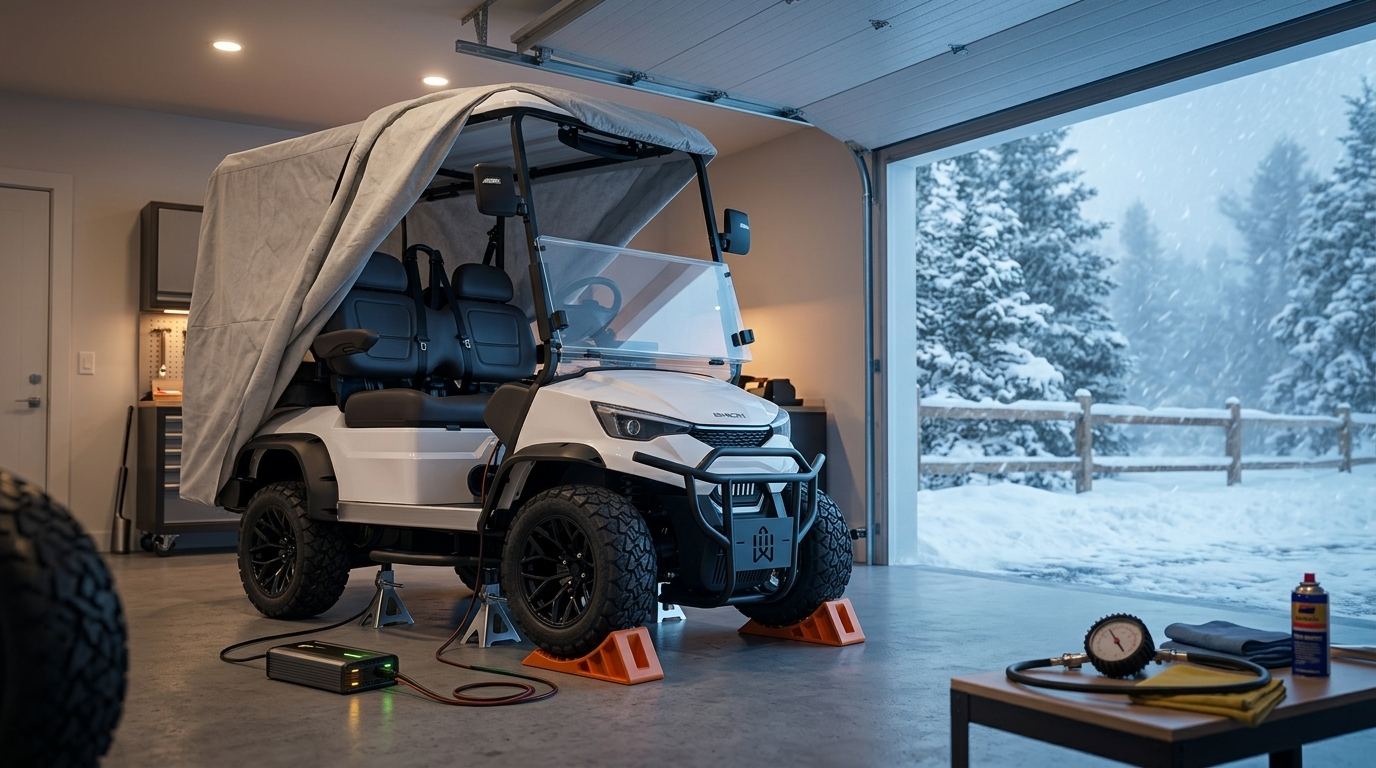
You had a great season. Your cart handled everything New Hampshire threw at it. The hills, the neighborhoods, the morning errands. And now October is here, the temps are dropping, and it's time to make a decision: put it away the right way, or risk pulling it out in April to find a cart that barely runs.
If you want to protect your battery, tires, and everything in between during the cold winter months, this guide is for you. Learning how to winterize a golf cart properly is one of the most valuable things you can do as an owner in a state where winters are genuinely harsh. It takes a couple of hours, saves real money, and means your cart is ready to roll the moment the snow melts.
Why Winterizing Matters More in New Hampshire
New Hampshire winters are not casual. We're not talking about a couple of cool nights. We're talking about sustained freezing temperatures, freeze-thaw cycles, road salt, and months of disuse. All of which do real damage to a cart that hasn't been prepared.
A few numbers worth keeping in mind before we dive into the steps:
As a general rule of thumb, for every 15 to 20 degrees Fahrenheit below 80°F, a lead-acid battery loses approximately 10% of its capacity. By the time you're sitting at a typical New Hampshire January temperature of around 20°F, that's a battery running at a fraction of its rated power, and that's if it survives storage at all.
Lead-acid batteries can lose 25 to 50% of their available capacity in cold weather, depending on temperature. Lithium batteries typically lose 10 to 25%. That gap is one of the biggest reasons NH owners are increasingly choosing lithium when it's time to replace.
And on the broader market side: electric vehicles now account for 95% of the golf cart market share in 2026, which means the overwhelming majority of carts being winterized right now are electric. That matters because electric golf cart maintenance in winter follows a different set of rules than gas, and getting those rules right is the difference between a smooth spring startup and an expensive battery replacement.
Step 1: Give Your Cart a Thorough Clean Before Storage
This one gets skipped more often than it should, and it costs people later.
Dirt, mud, and debris left on the frame, undercarriage, and wheels don't just sit there. In humid storage conditions, they hold moisture against metal surfaces and accelerate corrosion. A full wash with soap and water, followed by a once-over with a degreaser on any stubborn grime, takes this variable off the table entirely.
Pay particular attention to the undercarriage and the area around the battery compartment. Any corrosion that started during the season is going to get worse if it's left unaddressed going into a cold, damp winter. If you spot surface rust, clean it down to bare metal and apply a rust-inhibiting coat before storage.
After the wash, let the cart dry fully before moving to the next step. Storing a damp cart, even in an enclosed garage, gives moisture a head start.
Step 2: Address the Battery First: This Is the Most Critical Step
Golf cart winter storage and battery care are inseparable topics. The battery is the most vulnerable component in any electric cart, and the way New Hampshire winters behave makes proper battery preparation non-negotiable.
Here's what that looks like depending on your battery type:
Battery Type | Storage Charge Level | Temperature Risk | Key Action |
Flooded Lead-Acid | Fully charged (100%) | High; can freeze if discharged | Disconnect negative cable; check water levels monthly |
AGM (Sealed Lead-Acid) | Fully charged (100%) | Moderate | Use a smart maintainer; no watering needed |
Lithium (LiFePO4) | Partial charge (50-70%) | Low; handles cold better | Disconnect accessories; no trickle charging needed |
For lead-acid batteries, the fully-charged rule is not optional. A fully charged battery has a freezing point of around -80°F, while a discharged battery has a freezing point of around 20°F. That 20°F figure is well within the range of a typical New Hampshire winter night. A discharged battery left in an unheated garage can crack, leak, and become a complete write-off before March.
For lithium batteries, the approach is different. Most manufacturers recommend storing lithium-ion batteries with a partial charge, typically between 50% and 70%, rather than at 100%. Charging lithium to full before long-term storage actually degrades the cells faster.
After handling the charge level, clean the terminals with a mixture of baking soda and water, dry them thoroughly, and apply a thin layer of petroleum jelly to prevent corrosion from developing over the off-season. If you're storing indoors in a temperature-controlled space, even better. If your garage regularly drops below freezing, consider bringing the battery pack inside.
For anyone who came out this past spring to a battery that just wasn't performing, it may be time for a replacement rather than another winter of fighting it. Golf Carts built with lithium-native systems are particularly well-suited to New Hampshire's climate and eliminate most of the winter battery headaches that lead-acid owners deal with.
Step 3: Take Care of the Tires
Tires don't get enough attention in most winterization guides, but they're a real issue for carts that sit for months.
Cold temperatures lower tire pressure naturally, and the weight of a stationary cart compresses the same spot on each tire for an extended period. Both of these things lead to flat spots that affect ride quality and, in more severe cases, require early tire replacement.
Before storage, check the manufacturer's recommended PSI and inflate all four tires to that level. Then place chocks or blocks against the wheels rather than relying on the parking brake. Leaving the parking brake engaged for months creates tension on the brake cables that can cause them to seize or stretch.
If your cart will be sitting for the full winter without being moved, placing it on jack stands to take the weight off the tires entirely is worth the extra step.
Step 4: Inspect Brakes, Cables, and Moving Parts
Winter is a natural checkpoint for any maintenance you've been deferring. Before the cart goes into storage, take 20 to 30 minutes to do a basic mechanical inspection:
- Check brake function and cable tension
- Look for any loose bolts, nuts, or fasteners on the frame and seating
- Inspect the steering for any play or stiffness
- Check all lights and connections, especially if your cart is registered as a street legal NEV
If you're running a Premium Golf Carts configuration that's used for daily driving around your neighborhood, maintaining your brakes and electrical connections isn't just convenience; it's a legal requirement. For a full picture of what's required to keep a street legal cart in compliance, the Hampshire Golf Cart Laws 2026 guide covers everything from registration to equipment requirements.
Addressing small mechanical issues before winter is always cheaper than discovering them in April when you're ready to drive again.
Step 5: Set the Switches Correctly and Disconnect Power
This step is straightforward but important. Before storage:
- Turn the key to the OFF position and remove it
- Set the forward/reverse switch to NEUTRAL
- Place the Tow/Run switch in the TOW position (on carts that have one)
Setting the Tow/Run switch to the TOW position prevents unintentionally starting the vehicle or a fire hazard during storage. It also disables the regenerative braking system on electric carts, which relieves pressure on the battery pack during extended periods of non-use.
For carts without a Tow/Run switch, simply disconnecting the main battery cable achieves a similar result by preventing any slow power drain over the months.
Step 6: Protect the Exterior and Choose the Right Storage Space
Where and how you store the cart matters nearly as much as the preparation itself.
An enclosed garage or temperature-controlled storage unit is the ideal situation. It keeps the cart out of freeze-thaw cycles, protects it from road salt in the air, and makes it far less likely that pests will take up residence in the seating or under the hood during the winter.
If an enclosed space isn't available, a high-quality, breathable, weatherproof cover is the next best option. The key word is breathable. A non-breathable cover traps moisture inside, which is exactly what you're trying to avoid. A good cover handles rain, snow, and UV exposure while allowing any residual moisture to escape.
Before covering the cart, apply a coat of car wax to the painted surfaces to protect the finish from moisture and oxidation. For any chrome or metal trim, a light coat of protective oil prevents rust from taking hold over the winter months.
Step 7: Check In Monthly During Storage
Winterizing isn't a one-time task. It's worth scheduling a quick monthly check during the off-season to make sure everything is holding steady.
For lead-acid batteries, this means checking the water levels and confirming the battery is maintaining its charge. If you're using a smart maintainer or trickle charger, verify it's functioning correctly. For lithium batteries, the monthly check is simpler; a quick look at the charge level is usually sufficient.
Also take a moment to check that no pests have moved in. Rodents in particular are attracted to the warmth and shelter of a covered cart in a garage, and they can cause significant wiring damage over a winter.
What to Do When Spring Arrives
When you're ready to bring the cart back out, take your time rather than just turning the key and heading out.
Reconnect the battery and check the charge level before doing anything else. Inspect the tires and inflate to the correct PSI if they've dropped. Do a quick once-over on the brakes, lights, and turn signals. If it's a street legal cart, confirm all safety equipment is functional before taking it onto a public road.
If you're not sure whether your cart qualifies for road use in New Hampshire or want a refresher on the registration requirements, Are Golf Carts Street Legal in New Hampshire is a good place to start.
Quick Reference: Electric Golf Cart Maintenance Winterization Checklist
- Clean cart thoroughly, including undercarriage and battery area
- Charge or set battery to correct storage level based on battery type
- Clean and protect battery terminals
- Inflate tires to recommended PSI and chock the wheels
- Inspect brakes, cables, and mechanical components
- Set key to OFF, forward/reverse to NEUTRAL, Tow switch to TOW
- Cover cart with breathable, weatherproof cover or store in enclosed space
- Schedule monthly check-ins throughout the season
Ready to Make Sure Your Cart Is Set for the Season?
Whether you want to handle winterization yourself with this guide or prefer to have a professional take care of it, SNH Golf Carts is available to help owners across southern New Hampshire prepare their carts the right way. A quick service appointment before storage takes the guesswork out of it entirely and means you can head into winter knowing the cart will be ready when you are.
Book a Service Appointment or Browse Our Inventory
FAQs: How to Winterize a Golf Cart in NH
Q1. Do I need to remove the battery from my golf cart for winter storage in New Hampshire?
It depends on your storage situation. If your cart is stored in a temperature-controlled space that stays above freezing, the battery can stay in the cart as long as it's properly charged and maintained. If the storage space regularly drops below freezing, removing the battery pack and storing it indoors is the safer approach, particularly for lead-acid batteries, which can freeze and crack when discharged.
Q2. Can I just park my cart in the garage and skip winterization?
Skipping winterization and simply parking the cart is one of the most common causes of premature battery failure in New Hampshire. A cart that goes into storage with a partial charge, no terminal cleaning, and improper tire pressure will very likely come out in spring with reduced battery capacity, flat-spotted tires, and possibly a battery that needs to be replaced entirely. The prep work takes a couple of hours and saves considerably more in repairs.
Q3. How often should I check on my golf cart during the winter months?
A monthly check is the standard recommendation for electric golf cart maintenance during storage. For lead-acid batteries, this means checking water levels and verifying the charge is being maintained. For lithium batteries, the process is simpler. A quick charge-level check is usually all that's needed. It also gives you a chance to check that no pests have found their way into the storage area.
Q4. Is it worth upgrading to lithium batteries before putting my cart into winter storage?
If your lead-acid batteries are already showing signs of wear; reduced range, slow charging, or struggling on hills, going into another New Hampshire winter on a degraded pack is likely to make things worse, not better. Lithium batteries handle cold temperatures significantly better than lead-acid, require no water maintenance, and don't carry the same freezing risk. If a replacement is already in the cards, doing it before storage means you're starting next spring with a fresh, reliable system. Shop Golf Carts to see lithium-native options currently available.